I always thought Clark Ashton Smith was unfairly omitted from Appendix N. He gave D&D the Geas spell and his Zothique stories essentially gave rise to the language and themes of Jack Vance's Dying Earth tales.
But before he wrote short stories, he wrote poetry, another volume of which, Ebony & Crystal is now available on Gutenberg (along with The Star Treader)
Personally, I don't really like poetry (though I did like Data's poem about his cat). But still, worth a look, I think.
Showing posts with label Gutenberg. Show all posts
Showing posts with label Gutenberg. Show all posts
Tuesday, October 25, 2016

Wednesday, July 22, 2015
Gutenberg — Epics and Romances of the Middle Ages
This is a pretty big book with all sorts of different legends mostly from continental Europe. Dietrich of Bern (who I've never heard of) gets nearly a 100 pages and a bunch of other lesser heroes get about 30 pages each. Then it has Sigfried and the Ring Cycle ( (no Roy though), Beowulf, Roland and other Carolingian heroes, then a bit on King Arthur and finally ending with a guy named Tannhauser.
The illustrations are nice, but seemingly too small to use.
The illustrations are nice, but seemingly too small to use.
Tuesday, May 5, 2015
March 1934 issue of The Fantasy Fan available at Gutenberg
The Fantasy Fan being a fanzine which published authors such as H.P. Lovecraft, Clark Ashton Smith, and Robert Howard among others. The March 1934 issue is pretty short, but features a Conan story, better known as The Frost Giant's Daughter, but here called Gods of the North and Conan having a different name (Amra). There are also a couple of short joke articles.
I would love to see Gutenberg get more fanzines...
I would love to see Gutenberg get more fanzines...
Friday, March 27, 2015
Gutenberg—British and Foreign Arms and Armor
Another old book (1909) on historical arms and armor, this one is quite lengthy, and has a whole section on "banded" mail.
Anyway, it's got a ton of pictures of weapons and armor. Most are yellow tinted, as with a lot of old scanned books, but easily corrected.
Edit: Apparently this book was mentioned in Unearthed Arcana
No. 1 is perhaps the commonest of all, and will be referred to as “banded mail.” Its construction is fully dealt with in Chapter VII. Occasionally the lines between the alternate crescents are shown double, but probably that is only a modification of this style of defence. During the thirteenth and fourteenth centuries it was in constant use, and did not altogether die out for some considerable time afterwards. It is interesting to compare the variations in this style either of the actual defence or of the modes of delineation by the artists; the brasses of Bacon, Creke, d’Aubernoun, Northwode, Raven, Cheyne, &c., may be cited as examples worthy of interest in this respect, though many more may be found upon careful inspection
Anyway, it's got a ton of pictures of weapons and armor. Most are yellow tinted, as with a lot of old scanned books, but easily corrected.
Edit: Apparently this book was mentioned in Unearthed Arcana
Monday, February 9, 2015
Gutenberg—The Rhinegold & The Valkyrie (illustrations by Rackham)

Monday, January 5, 2015
I thought it was just another stupid monster from Fiend Folio...
well, I guess it still is, but apparently a "hugger mugger" was a real thing from British folklore (or literature), as there is a book, The Last of the Huggermuggers.
Wednesday, December 24, 2014
Gutenberg—The Dates of Variously Shaped Shields
Not many books are named as truthfully as this one. Kind of a boring book, but it does have a decent amount of illustrations of knights and such.

Friday, December 5, 2014
Gutenberg—The Catacombs of Rome

There aren't a lot of real world dungeons due to a lack of monsters, evil wizards, and dwarves (at least the type that mine). But there are a few, including the Catacombs of Rome.
The book has a number of neat illustrations useful for OSR type publications.
Monday, September 15, 2014
Gutenberg—Le Morte Darthur by Sir Thomas Malory

Friday, August 1, 2014
Gutenberg—Life on a Mediaeval Barony
Although I think D&D probably resembles the ancient era more than medieval/feudal, a lot of people feel otherwise, and this book, Life on a Mediaeval (sic) Barony by William Stearns Davis has a lot of information about 13th century life on a manor, with tons of illustrations.
Wednesday, July 16, 2014
Gutenberg—Stories from Northern Myths and Chicot the Jester
Not much happening right now OSR wise (working on a review of something for tomorrow), but Gutenberg has a couple of related books.
Firstly, Stories from Northern Myths, which is as you might expect, a collection of Norse and Germanic myths. Several illustrations, none of them particularly good. A couple look like photographs of actual people dressed up in old clothing.
And then Chicot the Jester from Alexandre Dumas. It's perhaps not as good as the Three Musketeers, but it's a pretty good tale of adventure and intrigue, and one that explains why the Jester could be a very viable D&D class.
Firstly, Stories from Northern Myths, which is as you might expect, a collection of Norse and Germanic myths. Several illustrations, none of them particularly good. A couple look like photographs of actual people dressed up in old clothing.
And then Chicot the Jester from Alexandre Dumas. It's perhaps not as good as the Three Musketeers, but it's a pretty good tale of adventure and intrigue, and one that explains why the Jester could be a very viable D&D class.
Thursday, July 10, 2014
Gutenberg—Mazes and Labyrinths
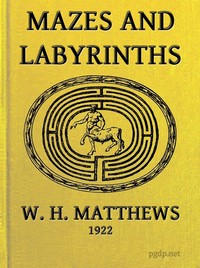
Mazes and Labyrinths by W. H. Matthews is a look at real life dungeons. Okay, most of them are above ground and made out of hedges, but there's a section on tomb dungeons
Sunday, July 6, 2014
Gutenberg—Orlando Furioso and Sketch of the History of the Knights Templar

It's in Spanish, but Orlando Furioso (Madness of Roland, I believe) has a lot of nice illustrations like the above. Really good stuff.
And then a book on the Templars, which is in English, but only has a few decent illustrations
Thursday, July 3, 2014
Gutenberg—The Knights of the Round Table

The Knights of the Round Table is pretty much what it sounds like.
Has a number of illustrations, though only one of knights fighting.
Sunday, June 29, 2014
Gutenberg Classic—Armour and Weapons

Why is it called chain mail instead of just mail? Why is banded mail in the game?This book is why.
Monday, June 23, 2014
Friday, May 23, 2014

Saturday, May 17, 2014
Gutenberg—Myth-Land by F. Edward Hulme
This is an late 19th Century book about various mythological monsters. Notably, it has pictures of a unicorn, manticore, and lamia (a very D&D like lamia).
The Lamia, too, is an extraordinary creature, and one that our not remote forefathers seem to have thoroughly believed in, for though the author says that there are many fictitious stories respecting it, he goes on to describe it, and gives an illustration. It is thought to be the swiftest of all four-footed creatures, so that its prey can seldom or never escape it. It is said to be bred in Libya, and to have a face like a beautiful woman, while its voice is the hiss of a serpent. The body is covered with scales. The old author tells us that they sometimes devour their own young, and we may fairly hope that this cannibal propensity of theirs is the cause of their disappearance. In earlier times men believed in a monstrous spectre called an Empusa. It could assume various forms, and it was believed to feed on human flesh. The Lamiæ, who took the forms of handsome and graceful women for the purpose of beguiling poor humanity, and then sucked their blood like vampyres and devoured their flesh, were one form of Empusa. The belief in some such creature seems to have been widespread; the myth of the Sirens is, for example, very similar in conception. In Mansfield Parkyns’ “Life in Abyssinia” we read—“There is an animal which I know not where to class, as no European has hitherto succeeded in obtaining a specimen of it. It is supposed by the natives to be far more active, powerful, and dangerous than the lion, and consequently held by them in the greatest possible dread. They look upon it more in the light of an evil spirit, with an animal’s form, than a wild beast; they assert that its face is human.” We learn, however, from the rest of the description, that this creature possesses itself of its prey by force alone; the human face is one further feature of terror, but does not, as in the previous case, serve to beguile mankind and lure them by its beauty to their fate.
Friday, May 16, 2014
Gutenberg—Ancient Cities of the New World
This is a fairly interesting and illustration laden book about the old cities of Mesoamerica
Wednesday, April 30, 2014
Hmmm, apparently Paladins weren't just for Charlemagne
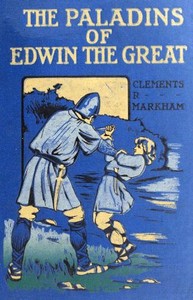
Gutenberg has a curious book, The Paladins of Edwin the Great. Apparently the Edwin in question is St. Edwin of Northumbria., who somewhat amusingly was succeeded by King Osric...
Subscribe to:
Posts (Atom)